
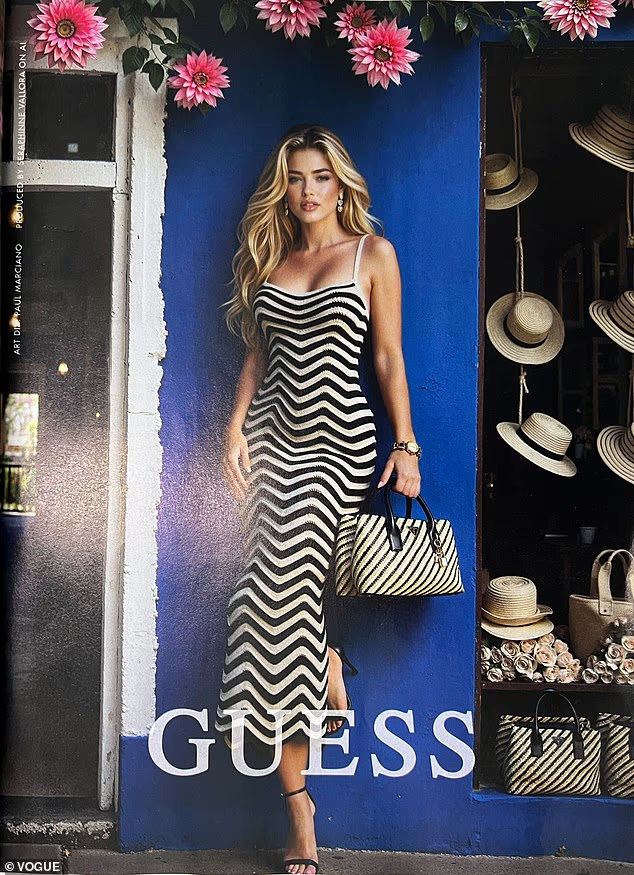
In Vogue magazine last year, Guess published an advert featuring a model generated by Artificial Intelligence (AI) who, in reality, does not exist. AI models are now a reality, and major brands such as Levi’s, H&M and others are experimenting with them. It is natural for models to be concerned, but in fact the issue is more nuanced than we might think.
 Brands are showing an interest in artificial intelligence for understandable reasons. Digital models can showcase a thousand outfits in a single day with the help of a single computer. The technology is used by online shops that need an endless supply of product photos. Customers' reactions, however, are mixed – many of them want to see real people in the photos. When Levi’s announced that it would use models created with AI to showcase a wider variety of faces and looks, customers argued that the easiest way to achieve greater diversity was to hire a diverse range of models. People still value authenticity and real faces, and that is good news for the fashion industry.
Legislation is also making progress in the field of AI. In New York, for example, a model’s consent is now required before a digital replica of them can be used, and further measures to protect privacy are likely to follow. AI may change the way the fashion industry works, but it will still need human creativity and presence.
Then how can models stay at the top of their game?
.jpg) One option is to build your own personal brand. AI can copy faces, but not personalities. Share your story, interests, and values on social media. Brands are increasingly hiring people who have a voice and an audience.
It is important to develop a variety of skills (beyond just posing). Fashion shows, music videos, acting, hosting TV shows, and live events—all of these require real people. The more well-rounded you are, the more job opportunities you’ll have.
Above all, you need to know your rights. Read contracts carefully, especially anything related to facial scanning or your digital image. Ask for how long your images will be used, where, and how you will be paid. Any good modeling agency should help you understand your rights.
 Once you have learned what a “digital twin” is, consider whether you want to have one based on your own values. With your consent and fair compensation, AI can become a tool rather than a threat, but this must be based on an informed decision on your part. Consult with experts in the field and with your agency.
Fashion has always been more than just clothes. It is linked to personality, stories, human connections, and destinies. Technology will continue to change and evolve, but models who adapt, stay informed, and show their true selves will always have a place on the fashion stage.
Author - Teodora Maude
.jpg)

